



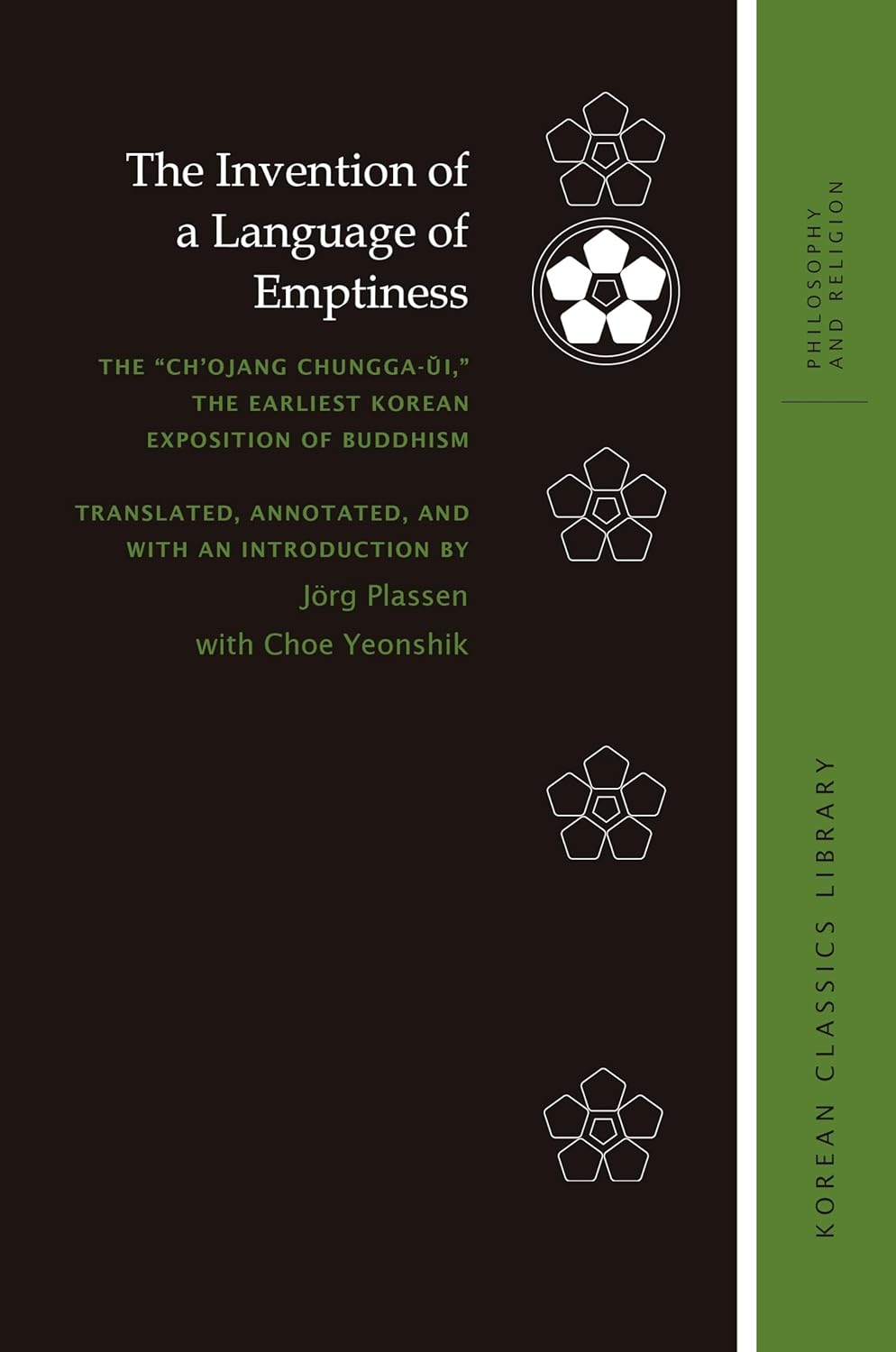
The Invention of a Language of Emptiness: The “Ch’ojang chungga-ŭi,” the Earliest Korean Exposition of Buddhism (Korean Classics Library: Philosophy and Religion) Hardcover – December 31, 2025

 4.0 (118 items)
 Limited Time Sale
€24.95 cheaper than the new price!!
Product details
| Management number | 219232936 | Release Date | 2026/05/03 | List Price | €16.63 | Model Number | 219232936 | ||
|---|---|---|---|---|---|---|---|---|---|
| Category | |||||||||
This volume is the first annotated translation in any language of the “Ch’ojang chungga-ŭi” (The Meaning of the “Middle and Provisional” in the “First Stanza”), a little-known text that yielded considerable influence on early East Asian Buddhism. It corresponds to the first chapter of the Taesŭng saron hyŏnŭi ki (Notes on The Dark Meaning of the Four Treatises, [Belonging to] the Great Vehicle), a Samnon/Sanlun compendium written by the Paekche monk Hye’gyun (fl. 6th/7th c.) after he studied with the famous Chinese Sanlun teacher Falang (507–581). Apparently directed at beginners, the “Ch’ojang chungga-ŭi” explains fundamental concepts in detail, thus giving precious corroborative information on Chinese Sanlun as mirrored in Jizang’s (549–623) works. Textual parallels with Jizang’s Lunji (Traces of the Treatise) shed new light on the extent that both disciples were indebted to their teacher, Falang. Additionally, the text provides first-hand insight into the nature of early Samnon in Paekche and important clues for understanding the origins of the famous Silla monk Wŏnhyo’s (617–686) patterns of exegesis. As the title implies, the text centers on the “First Stanza,” the fundamental exegetical formula Samnon/Sanlun students under Falang and his immediate successors had to master. The repetitive and formulaic style of the text shows that, contrary to widespread misconceptions, Sanlun/Samnon exegetes were less concerned with the scholastic study of authoritative texts than using the “Ch’ojang chungga-ŭi” to rehearse formulae designed to lead the practitioner toward awakening. In doing so, they struggled to find new ways of expression that transcended the usual apophatic versus cataphatic dichotomy of a middle path, avoiding any reification of the “middle” and the “provisional.” They created instead cataphatic formulae that constantly affirmed yet did not produce fixed meaning, just as “a,” the first character of the Siddham alphabet, pervades all texts, yet, as a negation prefix, constantly denies any attribution. The Invention of a Language of Emptiness will be of great use to those interested in commentarial exegesis as meditational practice and East Asian Buddhists’ attempts at developing a language of emptiness. Read more
| ISBN13 | 979-8880701070 |
|---|---|
| Language | English |
| Publisher | University of Hawaii Press |
| Dimensions | 6.24 x 0.69 x 9.24 inches |
| Item Weight | 1.7 pounds |
| Print length | 200 pages |
| Publication date | December 31, 2025 |
GIS


South

Correction of product information
If you notice any omissions or errors in the product information on this page, please use the correction request form below.
Correction Request Form